
Cattle feed · पशु आहार
Cattle Feed That Builds Milk: The Silage-Based Ration
Feed makes up 60–70% of the cost of producing milk in India, so the way a ration is built decides the profit of a dairy. A good cattle feed plan has four parts: a green-fodder base, some dry fodder for fibre, concentrate according to milk, and minerals with clean water. Corn silage is the most dependable base, because it gives the same nutrition every day of the year.
- Energy-rich roughage base
- Less concentrate to buy
- Works for cows, buffaloes and goats
- Free ration chart with your order
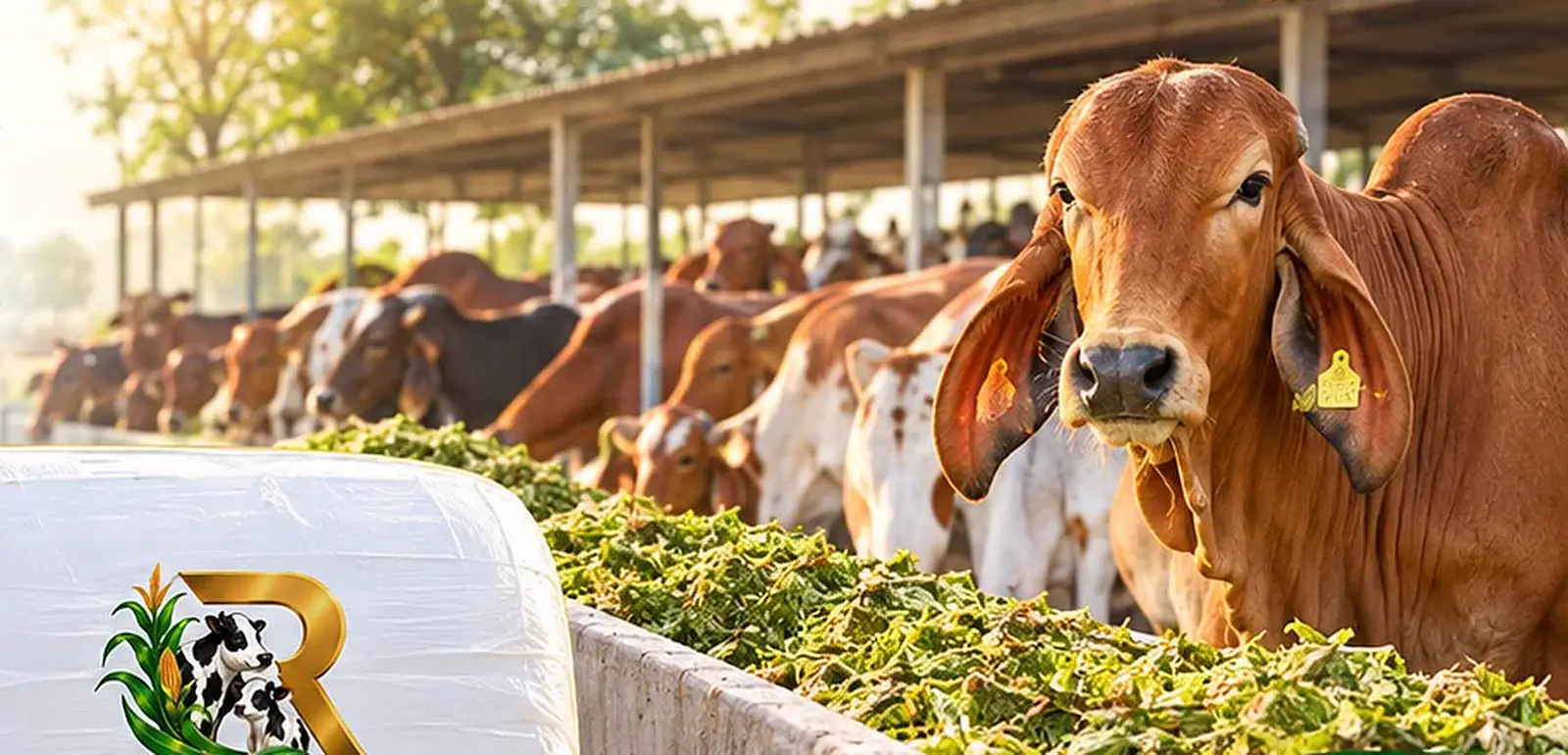
The four parts of a balanced ration
- Roughage base — corn silage (or fresh green fodder in season): energy, digestible fibre and protein.
- Dry fodder — 4–6 kg per adult animal for long fibre, so the animal chews cud and the rumen stays healthy.
- Concentrate (dana / cattle feed) — about 1 kg for every 2.5 litres of milk.
- Mineral mixture (about 50 g), salt (about 30 g) and unlimited clean water every day.
Silage and cattle feed work together
Silage is not a full replacement for concentrate. What it does is give the animal a much better base than straw: wheat bhusa has only 3–4% crude protein and 40–43% digestibility, while maize silage carries 7.9% crude protein on a dry-matter basis (NDDB) plus the energy of the grain. With a better base, the same milk needs less bought concentrate.
ICAR-IIMR feeding trials found a 10–20% rise in milk yield with whole-plant maize silage. The right message for your ration is simple: silage plus the right amount of cattle feed means a lower cost per litre.
Daily feeding chart
Use these quantities as a starting point and fine-tune with your milk records:
| Animal | Silage / day | Dry fodder | Concentrate |
|---|---|---|---|
| Milking cow / buffalo (400–450 kg) | 18–25 kg | 4–6 kg | 1 kg per 2.5 L milk |
| Dry / pregnant animal | 10–15 kg | 5–6 kg | 1–1.5 kg |
| Heifer (6–18 months) | 6–10 kg | 2–3 kg | 1 kg |
| Bull / gaushala adult | 12–18 kg | 5 kg | 0.5–1 kg |
| Goat / sheep | 1–3 kg | 0.5 kg | 200–300 g |
Switching to a silage-based ration
Change slowly over 7–10 days: start with 3–5 kg of silage after milking, raise it to 8–10 kg while cutting dry fodder by the same weight, then move to the full ration in two feeds. Record milk daily from week 3.
Frequently asked questions
What is the best cattle feed for milk?+
A balanced ration: corn silage or green fodder as the base, 4–6 kg dry fodder, concentrate at about 1 kg per 2.5 litres of milk, mineral mixture, salt and clean water.
Can silage replace cattle feed (concentrate)?+
No. Silage replaces green fodder and part of the dry fodder, and it reduces how much concentrate you need, but a milking animal still needs concentrate according to its milk.
How do I make a balanced cattle feed at home?+
Start with a good roughage base (silage), add dry fodder for fibre, give concentrate according to milk and never skip the mineral mixture. Our team prepares a free ration chart with your first silage order.
How much does a cow eat per day?+
A 400–450 kg milking cow eats 18–25 kg of corn silage, 4–6 kg of dry fodder and about 1 kg of concentrate per 2.5 litres of milk, plus 50 g mineral mixture.
Get a ration chart for your herd
Send your number of animals and daily milk. We'll share a ration chart and the silage rate for your district.