
Silage rate · per kg · per ton
Silage Price Today: How Corn Silage Is Priced
The question we hear most is "silage kya rate hai?" The honest answer is that the price of corn silage (maize silage) changes with the season, the maize crop and the distance to your farm, so a single price list would be wrong for most buyers. This page explains what goes into the rate, how to compare offers fairly, and how to get today's delivered rate for your district in one WhatsApp message.
- Rate per kg and per ton
- Delivered to your district
- Bulk and gaushala schedules
- 100, 400 and 500 kg bales
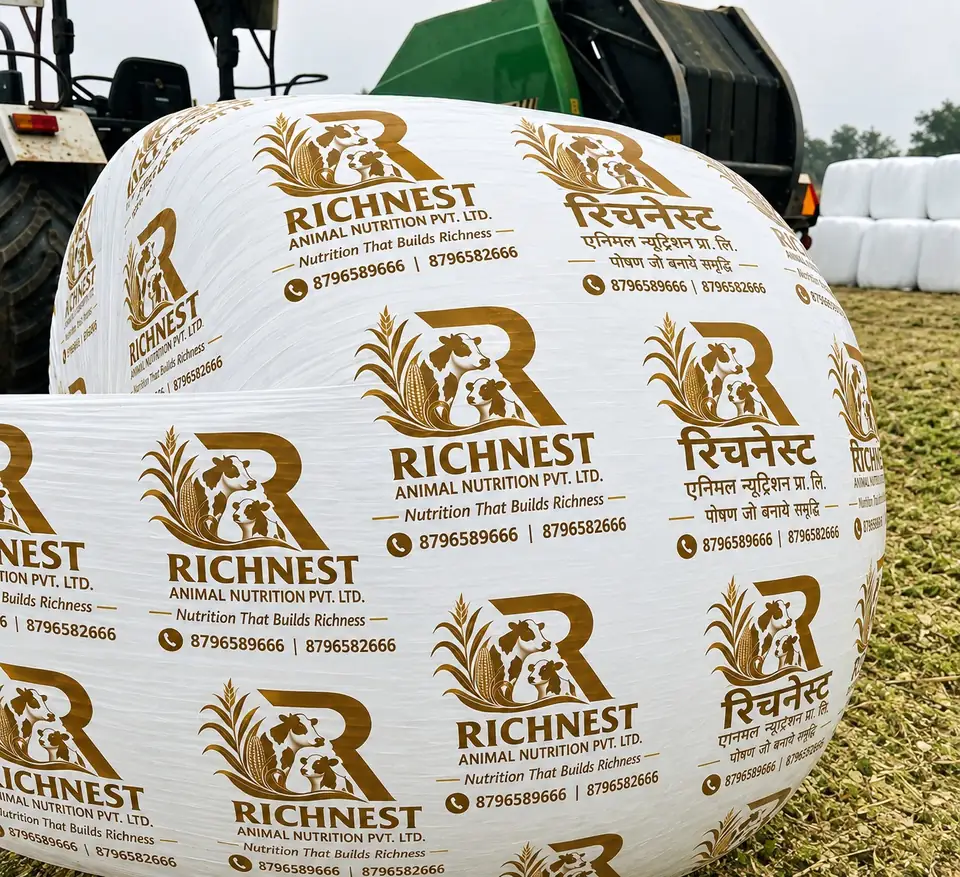
What decides the silage price
- Bale size: 100 kg bales cost more per kg to make and wrap than 400–500 kg bales, but suit small herds that must finish an opened bale in 3–5 days.
- Quantity: full-truck orders and monthly schedules for dairies and gaushalas get a better rate than single bales.
- Freight: silage is heavy, so the distance from our Punjab yards to your district is a real part of the delivered price.
- Season: the rate follows the maize crop. Stocking up before the summer fodder gap (March–June) and the October–November gap avoids the highest prices.
- Quality: dry matter, pH and the film decide how much of what you pay for actually reaches the animal.
Compare price per kg of dry matter, not per kg of bale
Two bales with the same price per kg are not the same value. Silage with too much water weighs more but feeds less, and a bale with a torn wrap loses part of its weight to spoilage. Richnest corn silage is harvested at 30–35% dry matter and sealed in 9-layer film, so you pay for feed, not water or waste.
Also compare against what you feed today. Wheat bhusa has only 3–4% crude protein, against 7.9% in maize silage at the milk stage (NDDB). When bhusa and green fodder prices climb in summer, silage often works out cheaper per litre of milk, even if its price per kg looks higher.
Silage price for gaushalas and bulk buyers
Gaushalas and large dairies buy by the truck on a fixed schedule. Tell us your number of animals and we will work out the monthly tonnage from the feeding chart and quote one delivered rate for the season. Many gaushalas run a full silage-based ration for around ₹50 per animal per day.
How to get today's rate
- Send your district and state on WhatsApp.
- Tell us the bale size (100, 400 or 500 kg) and the quantity in tonnes, or just your number of animals.
- Our sales team replies with the delivered rate and dispatch date. Mon–Sat, 9 AM–7 PM IST.
Frequently asked questions
What is the silage price per kg?+
It depends on bale size, quantity and freight to your district, so we quote a delivered rate per order. Send your district and quantity on WhatsApp for today's rate per kg.
What is the silage price per ton?+
Bulk orders are quoted per ton, delivered. Full-truck orders and monthly schedules for dairies and gaushalas get our best rate. Share your district and monthly tonnage on WhatsApp.
What is the price of a 50 kg or 100 kg silage bag?+
Our smallest bale is 100 kg, made for farmers with 2–3 animals. Its rate per kg is a little higher than the 400–500 kg bales because wrapping costs more per kg. Ask on WhatsApp for today's rate.
Why is silage cheaper in some places?+
Low prices can hide wet silage (more water, less feed), short weights or torn wraps that spoil. Compare price per kg of dry matter and ask about dry matter, pH and the film used.
Is silage cheaper than bhusa?+
Per kg, bhusa can look cheaper, but it has only 3–4% crude protein against 7.9% for maize silage. Per litre of milk, a silage-based ration often costs less, especially in summer when bhusa and green fodder prices rise.
Get today's silage rate
Send your district, bale size and quantity. We reply with the delivered rate.