Dairy Nutrition
Bhusa Rate Today vs Silage: What Dry Fodder Really Costs You
Every dairy farmer checks the bhusa rate. After the wheat harvest it is cheap, and by the monsoon and winter it climbs, sometimes sharply, as stocks run down and demand from dairies and gaushalas grows. Many farmers also ask about the chane ka bhusa rate and the sukha chara price in the mandi. But the price per quintal tells you only half the story. What matters is how much milk each rupee of fodder produces.
Why bhusa is cheap feed but expensive milk. Wheat bhusa has only 3–4% crude protein and 40–43% digestibility (ICAR Handbook). The ICAR Handbook goes further: bhusa's intake and digestibility usually do not provide enough energy even for the animal's maintenance. FAO notes that animals fed cereal straws alone invariably lose weight. In plain words: bhusa pet bharta hai, doodh nahi — bhusa fills the stomach, not the milk can.
What about chane ka bhusa? Gram straw is softer and a little richer than wheat bhusa, and animals like it more, which is why it usually costs more. It is still a dry crop residue, not a green fodder. It is a good part of a ration, but it cannot carry a milking animal on its own any more than wheat bhusa can.
Corn silage is different feed, not just different fodder. Maize silage at the milk stage carries 7.9% crude protein on a dry-matter basis (NDDB), about double wheat bhusa, plus the energy of the grain inside the cob. It is moist, soft and sweet-sour, so animals eat more of it. ICAR-IIMR feeding trials found a 10–20% rise in milk yield with whole-plant maize silage.
A real trial on swapping bhusa for silage. In a small lean-season study in Kashmir (10 cows over 30 days), cutting wheat straw from 7 kg to 2 kg and adding 6 kg of maize silage raised fat-corrected milk from 6.47 to 7.39 kg per day and earned ₹28 more per animal per day, with a benefit-to-cost ratio of 1.28 against 1.03. It was a small study, but it shows the right way to think: replace part of the straw, measure the milk, count the money.
How to compare costs on your own farm. Take one week of records. Write down what you pay daily for bhusa, green fodder and concentrate for one milking animal, and how much milk she gives. Divide the feed cost by the litres: that is your feed cost per litre. Then run a 30-day trial with silage replacing part of the bhusa and the green fodder, keeping the same concentrate. Recalculate cost per litre. That number, not the bhusa rate, decides which feed is cheaper for you.
When bhusa still has a place. Silage does not replace all dry fodder. Adult animals need 4–6 kg of dry fodder a day for long fibre, so they chew cud and the rumen stays healthy. The right ration is silage as the base, a smaller amount of bhusa for fibre, concentrate according to milk, a mineral mixture and clean water.
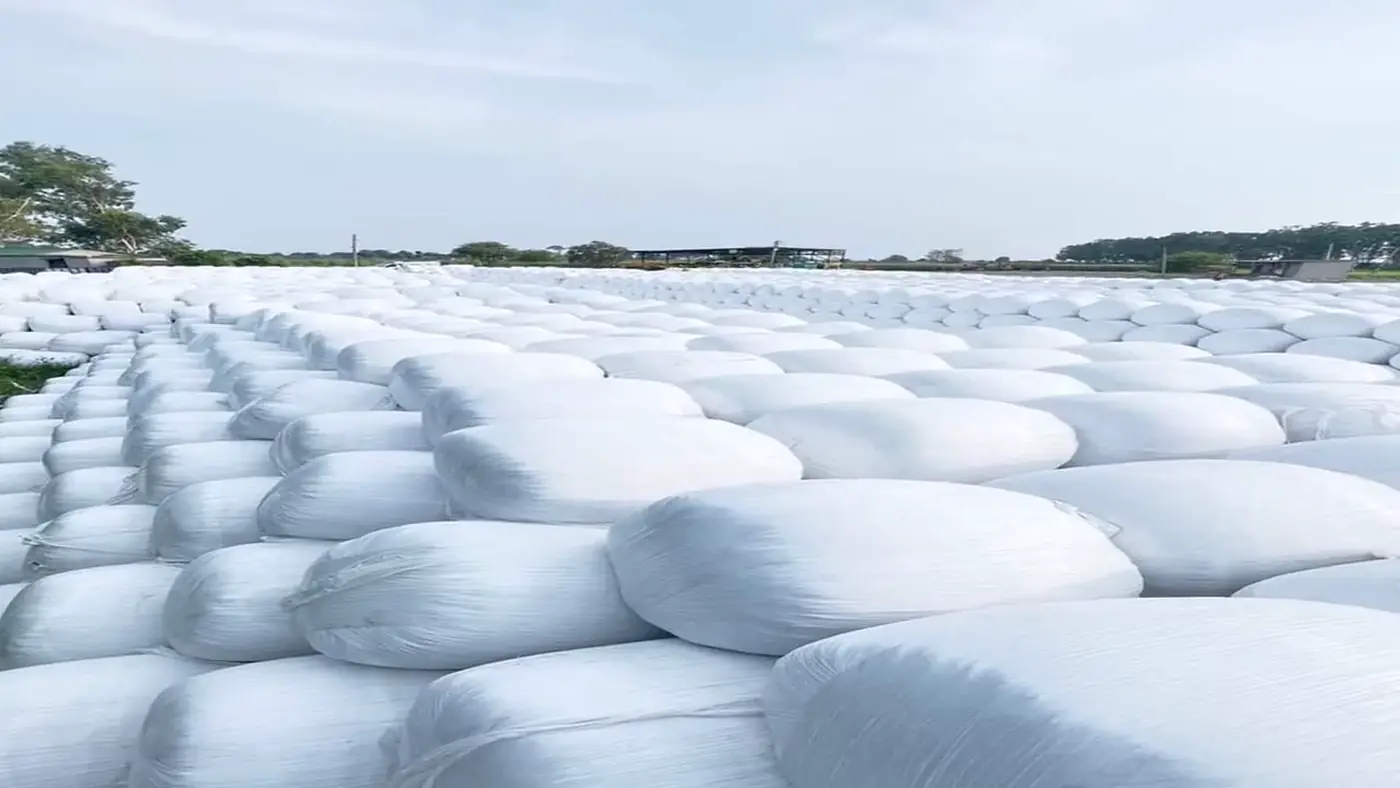
Buy fodder before the rate rises. The bhusa rate and green fodder prices are highest in the lean months, roughly March–June and October–November. Silage bales keep for 12+ months when sealed, so stocking before these months protects both the milk and the budget.
Want the numbers for your herd? Send us your animals, daily milk and what you feed today on WhatsApp. Our team will prepare a ration chart and the delivered silage rate for your district, so you can compare per litre, not per quintal.