Silage Making
Silage vs Hay: Which Is Better for Indian Dairy Farms?
Both silage and hay are ways to store green fodder for the months when fields are bare. Hay is dried until it can be stored; silage is kept moist and preserved by fermentation. Which one is better depends on the weather, the crop and the farm, and for most of India the answer leans clearly one way.
Hay needs sunny weather. Making good hay needs several rain-free days in a row so the crop can dry in the field. The Indian monsoon, when most fodder grows, rarely gives that. Silage can be made even when the weather will not let a crop dry.
Rain damages hay badly. In University of Wisconsin studies, one inch of rain on drying hay caused 22% dry-matter loss, and heavy rain on nearly-dry hay caused losses of up to 54%. Silage typically loses only 5–20% of its dry matter during fermentation, and once sealed it is safe from rain.
India's best fodder crops suit silage. Thick-stemmed crops like maize, jowar and bajra take a long time to dry and are best made into silage; thin-stemmed grasses and legumes are better suited to hay. Maize, the highest-yielding fodder crop in most of India, is a silage crop.
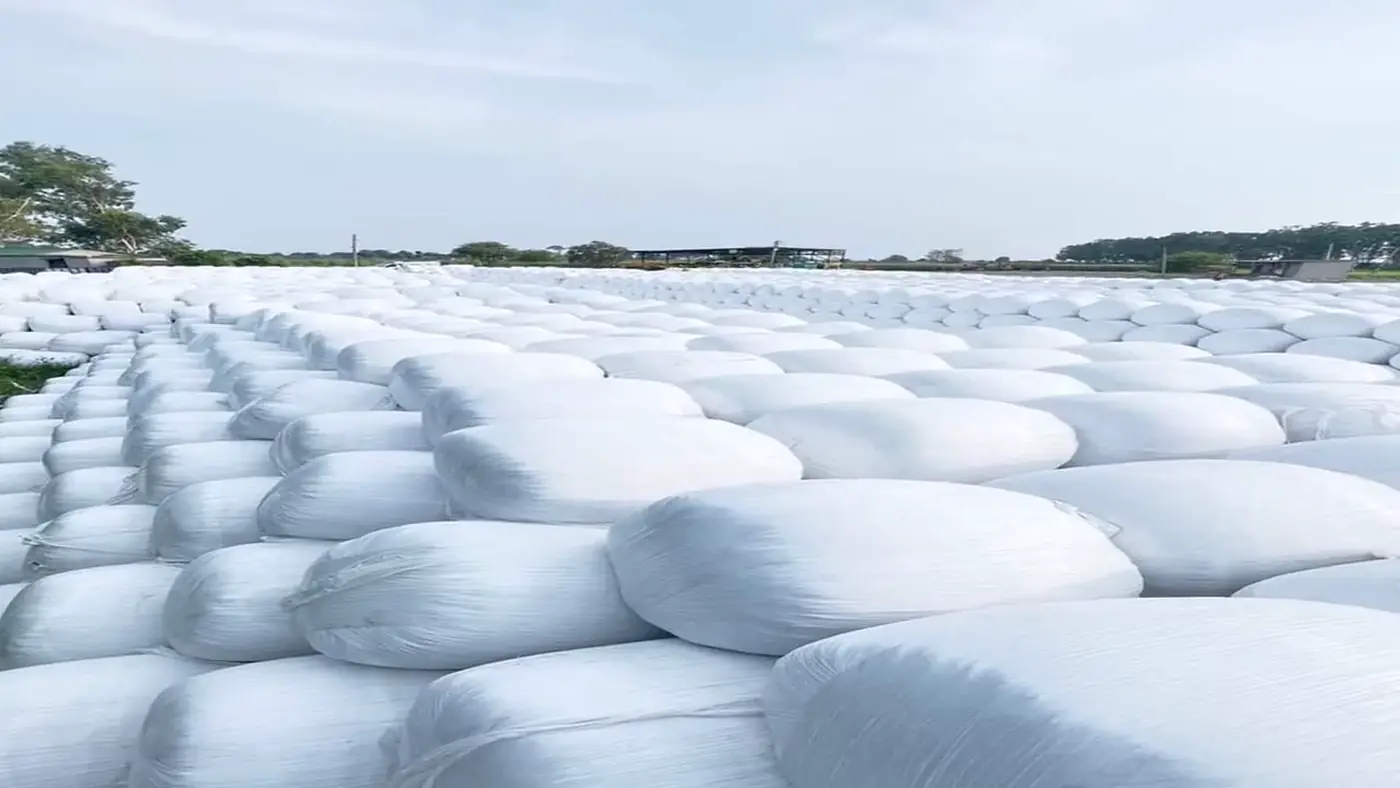
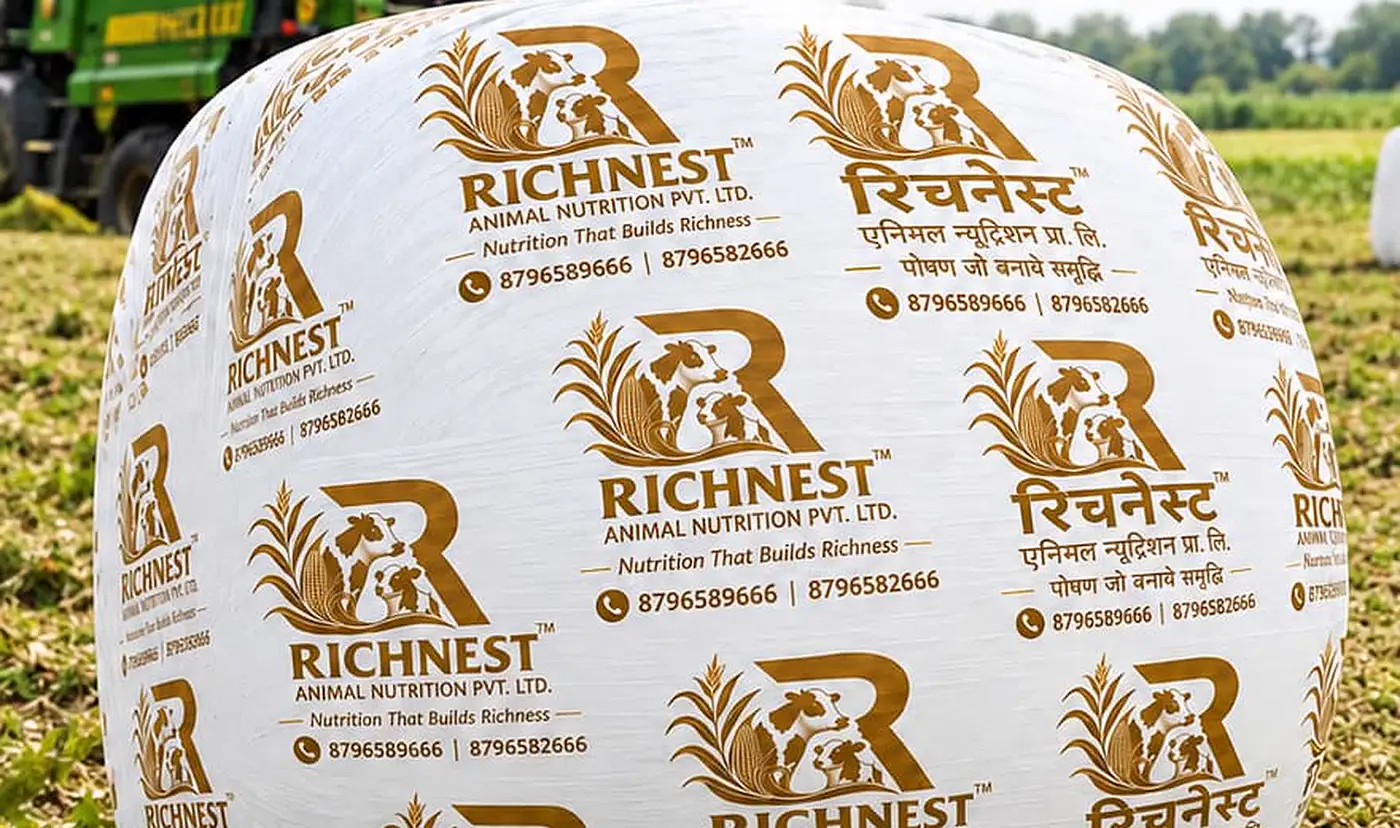
Storage and space. Silage stores the harvest from more land in less space than dry fodder, and a sealed bale keeps for 12+ months. Hay needs a dry, covered store and is easily spoiled by damp.
What about milk? To stay honest: a US study comparing well-made alfalfa hay with alfalfa silage found similar milk output. Silage's advantage in India comes from the weather, the crop and lower storage losses, not from silage always giving more milk than good hay. If you can buy good, green, leafy hay, it is a fine part of a ration.
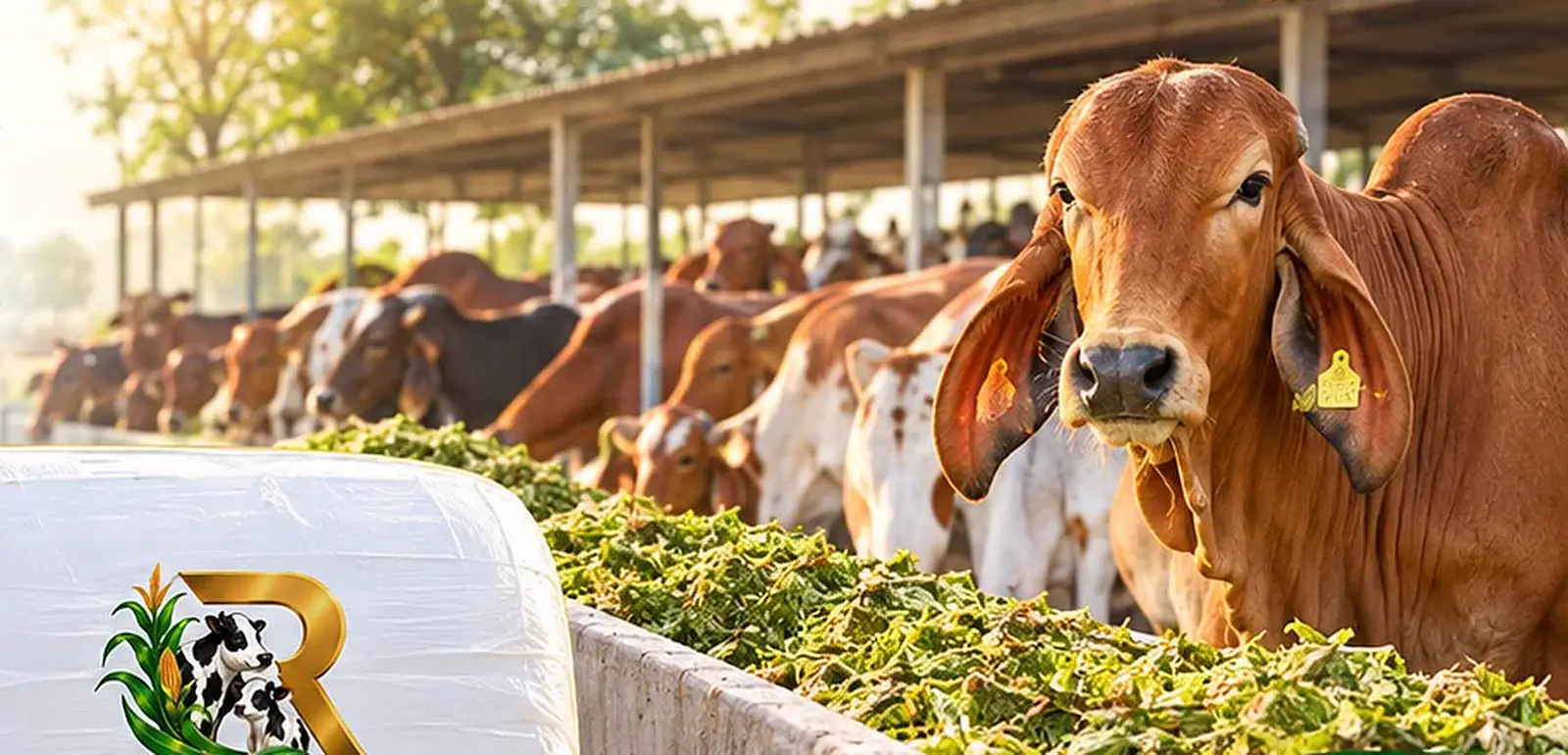
The practical answer. For most Indian dairies and gaushalas, maize silage is the more reliable way to have green fodder all year, with a smaller amount of dry fodder (hay or bhusa) for long fibre. Adult animals need 4–6 kg of dry fodder a day alongside silage.
Want to try silage before deciding? Start with a 30-day trial: replace part of your dry and green fodder with silage, keep the concentrate the same and record milk daily. Message us on WhatsApp for trial bales.