Silage Making
What Is Silage? A Complete Guide for Indian Dairy Farmers
Silage is green fodder that has been preserved by fermentation. The whole crop — for corn silage, the stalk, leaves and cob together — is harvested while it is still green and moist, chopped into small pieces, packed tightly and sealed away from air. Inside that airtight package, natural bacteria turn the plant's sugars into lactic acid. The acid 'pickles' the fodder, which is why Punjabi farmers call it pashuan da achar and many Hindi-speaking farmers call it makki ka achar — the cattle's pickle. In Hindi it is written साइलेज, and in Punjabi ਸਾਇਲੇਜ.
Why does this matter? Green fodder is at its most nutritious for only a few weeks. Cut it too early and there is little to harvest; wait too long and it dries out into low-value straw. Silage captures the crop at its peak and holds it there. A sealed bale of good corn silage keeps its energy, protein and moisture for 12 months or more, so the herd eats the same quality feed in May and June as it does in October.
How fermentation works. Once the chopped crop is sealed, the little oxygen left inside is used up within hours. Lactic acid bacteria, which live naturally on the plant, then multiply and convert sugars into lactic acid. Over roughly three weeks the pH falls from around 6 to between 3.8 and 4.2. At that acidity, the moulds and spoilage bacteria that would normally rot wet fodder cannot grow, and the silage becomes stable. As long as air stays out, it stays good. Air is the single biggest enemy of silage — every hole, loose wrap or badly packed corner lets oxygen back in, and with it heating and mould.
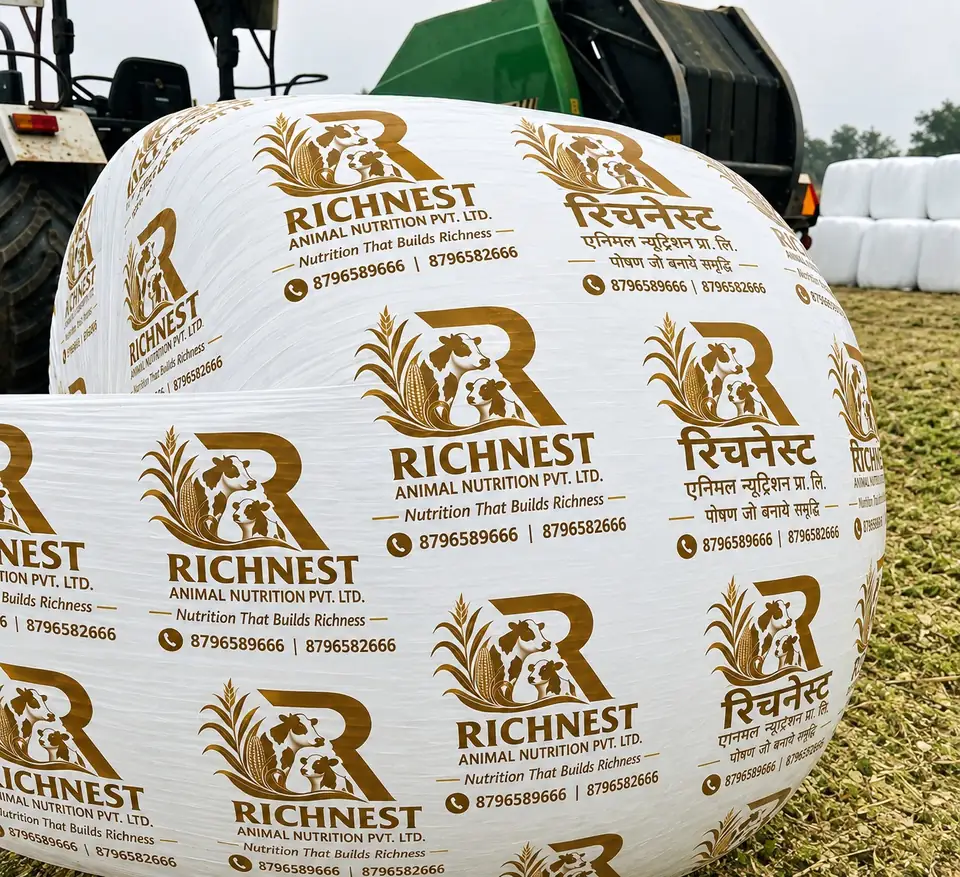
The three conditions for good silage. First, the right moisture: corn should be harvested at 30–35% dry matter (65–70% moisture), usually at the milk-dough stage of the grain. Too wet and the silage turns sour and smelly; too dry and it cannot be packed tightly enough to push the air out. Second, the right chop length: 8–12 mm pieces pack densely and ferment evenly. Third, a complete seal: at Richnest every bale is compacted and wrapped in 9-layer high-barrier stretch film so no oxygen gets back in.
Which crops make the best silage in India? Maize (corn) is the first choice almost everywhere. It has a high sugar content that ferments easily, the grain adds energy, and a single acre gives a very large amount of feed. Sorghum (jowar), pearl millet (bajra) and oats are also ensiled, especially where water is short or in the winter season, and multi-cut grasses such as Napier can be ensiled with care. Legumes like berseem and lucerne are rich in protein but harder to ferment on their own because they have less sugar, so they are usually wilted first or mixed with maize.
Silage vs bhusa vs green fodder. Dry straw (bhusa or gusa) is about 90% dry matter but carries only 3–4% usable protein, and its digestibility rarely crosses 45% — it fills the stomach without feeding the animal much. Fresh green fodder is excellent while it lasts but is seasonal, takes daily cutting labour and disappears in summer. Corn silage carries 8–9% crude protein on a dry matter basis with 65–70% digestibility plus the energy of the grain, and it is available on any day of the year. That combination is why progressive dairies build their ration on silage, with a smaller amount of dry fodder for long fibre.
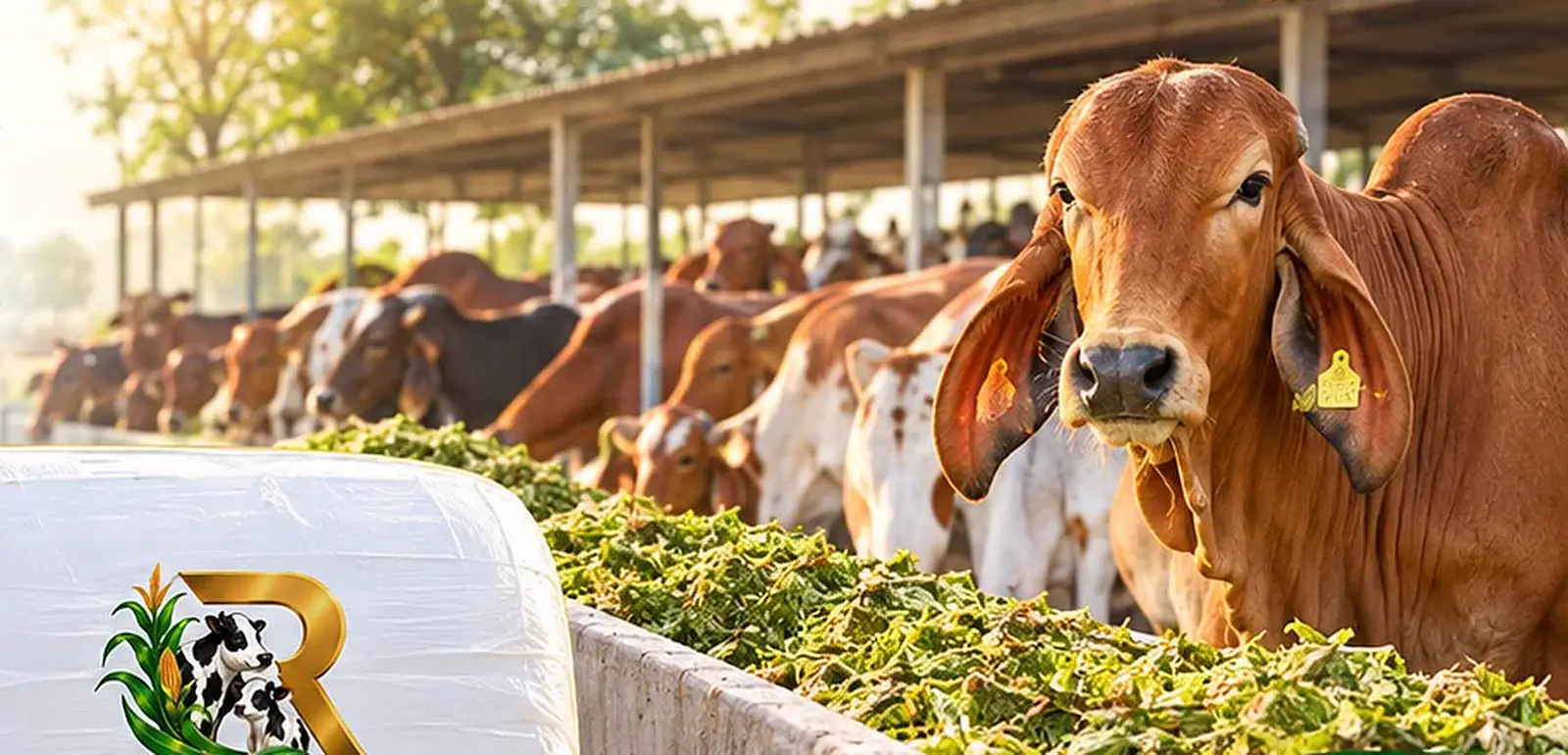
What silage does for milk. When cattle move from a straw-heavy diet to a balanced ration built on corn silage, farmers typically see 1.5–2.5 litres more milk per animal per day, and — just as important — milk that holds steady through the summer fodder gap instead of crashing. Silage is soft, moist and has a sweet-sour smell that animals like, so intake goes up, and a well-fed animal also holds body condition better for the next calving.
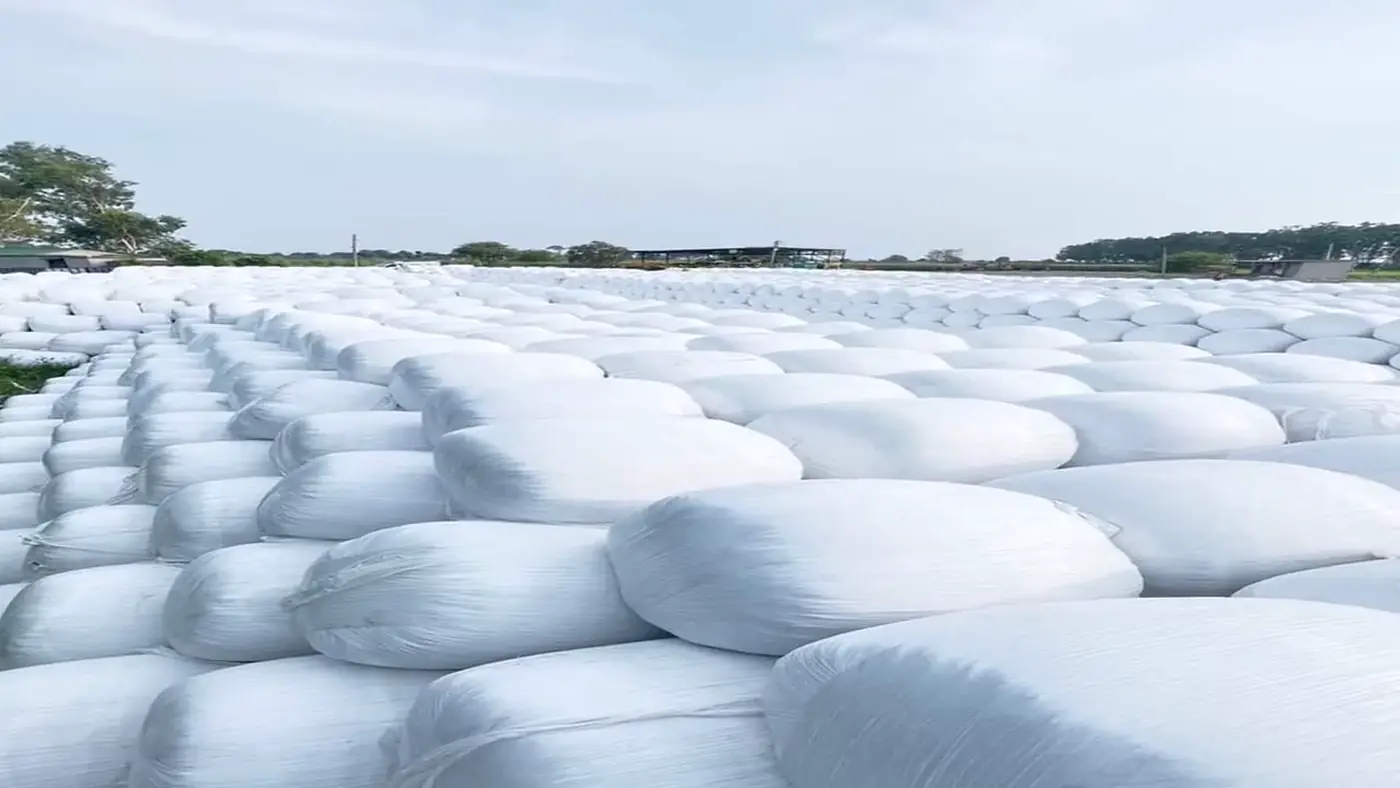
Pits, bunkers, bags or bales? Silage can be made in an earthen pit, a concrete bunker, large plastic bags or wrapped bales. Pits and bunkers are cheap per tonne but need a big herd to use the open face quickly, heavy compaction with a tractor, and careful covering; a lot of silage is lost at the top and sides when this is not done well. Wrapped bales cost more to make but each one is its own sealed package: you open only what you need, there is almost no top or side spoilage, and bales can be transported, stored and sold. For small and medium farmers who do not have machinery or a large herd, buying ready bales is usually the simplest way to start.
How to start feeding silage. Never switch the whole ration overnight — the rumen needs time to adjust. Over 7–10 days, begin with 3–5 kg mixed into the usual fodder, build to 8–10 kg while reducing dry fodder by the same weight, and then move to the full ration of 15–25 kg per adult cow or buffalo depending on body weight and yield, split into two feeds. Keep 4–6 kg of dry fodder, a mineral mixture and plenty of clean water in the ration. Our Silage Hub has the full ration chart for every type of animal.
Storing and using bales. Keep sealed bales in shade, off wet ground and away from rats and sharp objects. Once a bale is opened, finish it within 3–5 days and keep the cut face covered between feeds. That is why we supply smaller bales for small herds and large round bales for dairies and gaushalas — choose the size your herd can finish in time.
Is silage right for your farm? If you keep even a few milking animals and struggle with summer fodder, rising straw prices or dropping milk, silage is worth a 30-day trial. Replace part of the dry fodder, record milk every day, and let the milk pail decide. Richnest makes premium fermented corn silage bales in Punjab and supplies farmers, dairies and gaushalas — message us on WhatsApp for a trial lot and a free ration chart for your herd.